Recreational Vehicle Appraisal: What It Costs, How It Works, and What Makes RVs Different
By Auto Appraisal Pros Team · October 6, 2026 · 11 min read

A recreational vehicle appraisal values the chassis and the living space together — something a standard auto pricing guide was never built to do. It typically costs $195 to $500, takes 3 to 10 business days, and covers the engine and drivetrain the same way a car appraisal would, plus the roof, appliances, and interior systems a car doesn't have at all.
An RV is two products wearing one VIN: a vehicle and a small building. Most valuation tools were built for the vehicle half and simply average past the rest.
8.1 million U.S. households currently own an RV, and the median age of a new buyer has dropped to 32 — which means a lot of people are valuing one of these for the first time, usually with no real sense of what actually moves the number. A first-time owner running a sedan-pricing habit against a motorhome is about to learn that lesson the hard way, and most people learn it from an insurer rather than from us, which is the more expensive way to find out.
What Makes an RV Appraisal Different
A car's value comes almost entirely from the chassis, engine, and body. An RV's value comes from all of that plus a second system most pricing tools never touch:
- The chassis and drivetrain (motorhomes only — travel trailers and fifth wheels skip this entirely and get towed instead).
- The living space — appliances, plumbing, electrical, slide-outs, and interior finish, which age on their own schedule, independent of the odometer.
- The roof and seals — the single most consequential system on the whole unit, covered in its own section below because it earns one.
A standard car guide can tell you what the chassis is worth. It has no opinion on the water heater, the slide-out mechanism, or whether the roof seal was redone in year six like it should have been.
The Types We Appraise
- Class A, B, and C motorhomes. Full chassis and drivetrain plus the living space — the most involved appraisal of the group, since both halves need documenting.
- Travel trailers and fifth wheels. No engine or drivetrain to value, but the same living-space systems, frame, and axles still matter.
- Truck campers and pop-up campers. Smaller living space, but the same roof and seal questions apply at a smaller scale.
What an Appraiser Actually Looks At
- Structural and mechanical condition. Chassis, suspension, and drivetrain on a motorhome; frame and axles on a towable. A frame that's been re-welded after an accident gets documented, not glossed over.
- Interior systems. Appliances, HVAC, plumbing, and electrical — including any solar or generator upgrades, which a generic guide has no line item for and therefore simply ignores.
- Roof and water history. Covered next, because it deserves more than a bullet point.
- Mileage and usage. Weighed against age and maintenance records, not treated as the whole story the way it might be for a daily-driver car — an RV that sat in storage for three winters has its own condition story mileage alone won't tell.
- Modifications. Custom interiors, suspension work, and off-grid upgrades that can meaningfully move the number in either direction depending on who's buying.
We will absolutely open every cabinet. Not out of nosiness — water finds the cabinets first and tells on itself later. (We know how that sounds. We're not going to stop doing it.)
What to Have Ready
- The VIN and title, plus registration if the RV is currently titled and tagged.
- Current mileage for a motorhome (not applicable to a towable).
- Maintenance records, especially anything documenting roof seal or seam maintenance.
- Photos of the exterior, roof, interior, and any known problem areas — don't hide the soft spot, an appraiser will find it anyway.
- A list of modifications or upgrades: solar, generator, suspension, or interior customization.
The Roof and Water Damage Problem
Roof and water damage are the most common and most expensive problems on any RV, and they're often the least visible from a listing photo. A small, long-neglected roof seal failure can quietly soak into wall framing and flooring for years before anyone notices a soft spot — by which point the repair is structural, not cosmetic.
Even a properly repaired leak can affect value if the repair isn't documented. An appraiser treats roof condition and water-intrusion history as a standard, explicit line item — not an afterthought buried in a general condition grade the way a quick online estimate tends to handle it.
The scale of the problem is why it earns its own section: a simple sealed leak might run $150 to $1,000 to fix, but extensive water damage requiring structural repair can run $3,000 to $6,000 or more. That gap — a thousand dollars versus a totaled interior wall — is exactly the kind of thing a five-second online estimate has no way to see and a roof inspection catches immediately.
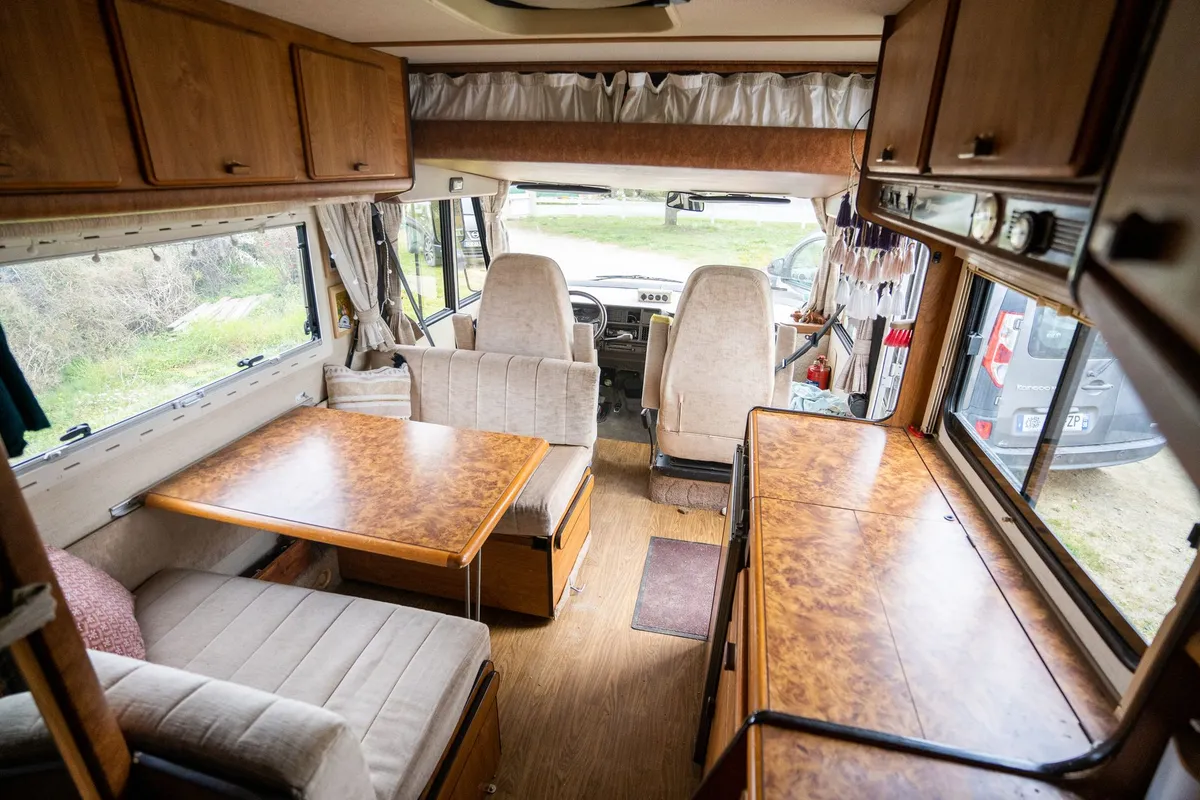
The living space: the half of the appraisal a standard car pricing guide has no opinion on.
What an RV Appraisal Costs
| RV Type | Relative Cost | Why |
|---|---|---|
| Truck camper / pop-up | Lower end of range | Smallest living space, no separate chassis to value |
| Travel trailer / fifth wheel | Lower-to-middle | No drivetrain, but a full living space to document |
| Class A, B, or C motorhome | Middle-to-higher end | Chassis, drivetrain, and living space all need documenting |
| Any type, legal or insurance dispute | Higher end | More documentation required to make the report hold up |
Most RV appraisals run $195 to $500 in total, depending on the unit's size and complexity and what the report is for. A straightforward travel trailer sits at the lower end. A motorhome with custom systems, or a report built for an insurance or legal dispute, sits at the higher end — more systems to document means more documentation to write.
Here's the one opinion I'll hand you: for an RV specifically, that cost is one of the easier calls to make than it is for a car, because the gap between a free estimate and a real appraisal is bigger here. A $300 appraisal protecting a $60,000 motorhome's agreed-value insurance policy is a rounding error against what a denied or underpaid claim would actually cost you.
How Long It Takes
Most single-RV appraisals wrap up in roughly 3 to 10 business days from the time all documentation and photos are in hand — the physical inspection itself is usually the fast part; the comparable research and report-writing take the rest. A motorhome with aftermarket systems or a unit with a complicated title history takes longer than a stock travel trailer with clean paperwork.
When You Actually Need One
A free online RV value estimate is fine for a casual gut check. A real appraisal earns its cost when:
- Your insurer requires one for an agreed-value policy. Common once an RV passes roughly five model years old, or carries custom features a standard valuation tool can't price — solar systems, custom interiors, suspension modifications, or generator upgrades all fall into that gap.
- You're disputing a total-loss settlement. An insurer's database doesn't know about your roof resealing or your upgraded suspension; an appraisal puts both back into the number.
- You're financing, selling privately, or settling an estate. The number needs to hold up to a lender, a buyer's due diligence, or an executor who can't just take your word for it.
- You're donating the RV. The IRS requires a qualified appraisal to substantiate most noncash donation deductions of $5,000 or more, and a free online estimate doesn't meet that bar.
If none of that applies, save the money and use a free estimate. If any of it does, the free number wasn't built to survive the conversation you're about to have.
RV Value vs. RV Appraisal
An online “RV value” tool is the same idea as a car pricing guide: type in the make, model, and year, and get a number pulled from averages. It has never opened a single cabinet. An RV appraisal is a documented valuation from someone who inspected your specific unit, checked the roof, and compared it against real local market listings instead of a national average.
The two numbers can diverge a lot. A dealer trade-in offer, a private-sale estimate, and an insurance agreed value are three different numbers for the same RV, and an online tool typically only gives you one of the three. An appraisal built for the actual purpose you need — financing, a sale, or insurance — is the only version of the three that's built to answer the question you're actually asking.
Personal property appraisal — the category RVs fall under — is a credentialed discipline. The American Society of Appraisers trains and accredits appraisers specifically in personal property valuation, automotive specialties included — the same credential that separates “I looked it up online” from a report an insurer or a court is willing to take seriously.
Before choosing an appraiser, confirm two things: that they actually appraise RVs specifically, not just cars with the word “RV” added to their service list, and that the report includes the comparable listings used, not just a final number. A number with no comparables behind it is exactly the kind of report an insurer's own appraiser will pick apart first.
How to Get Your RV Appraised
RVs spend a lot of time somewhere other than home — in storage, mid-trip, or at a dealer lot three states away — so a remote appraisal built from your photos and documentation is usually the practical default rather than a compromise. An in-person inspection makes sense when a dispute specifically calls for one or the roof and structural condition genuinely need a closer look than photos can give.
Send us the RV's details — VIN, mileage, photos of the exterior, interior, and roof, plus any maintenance or repair records you have. You can pull the vehicle's title and history through the National Motor Vehicle Title Information System beforehand if you want a head start on that piece. We review the unit — remotely in most cases, in person when the situation calls for it — research current local market comparables, and send back a written report built to hold up wherever you need to submit it.
Request an appraisal to get started, or browse more guides like this on the blog.
Send us the rig, tell us about the roof, and we'll send back a number that accounts for both halves of what you actually own — the vehicle and the house riding on top of it.
Frequently Asked Questions
How much does an RV appraisal cost?
Typically $195 to $500, depending on the RV’s size, age, and the appraisal’s purpose. A motorhome with complex systems generally costs more to appraise than a simple travel trailer, and a report built for a legal or insurance dispute costs more than one for your own records.
How long does an RV appraisal take?
Most single-RV appraisals are completed in roughly 3 to 10 business days from the time all documentation and photos are received, depending on the appraiser’s backlog and how complex the rig is.
Is an RV appraisal the same as an RV inspection?
No. An inspection checks mechanical and structural condition — what’s broken or at risk of failing. An appraisal uses that condition information, plus market comparables, to answer a different question: what the RV is actually worth.
Do I need an RV appraisal for insurance?
Often, yes. Insurers commonly require a formal appraisal before issuing an agreed-value policy on an RV older than about five model years, or one with significant custom features — solar systems, custom interiors, suspension work — that a standard valuation tool has no way to price.
What’s the difference between RV value and an RV appraisal?
An online “RV value” tool returns a quick estimate from averages, the same way a car pricing guide does. An RV appraisal is a documented, written valuation from a professional who actually inspected the specific unit — useful anywhere the number needs to hold up to someone else’s scrutiny.
Does roof or water damage affect an RV appraisal?
Significantly. Roof and water damage are the most common and most expensive problems on an RV, and even a repaired leak history can affect value if it isn’t fully documented. An appraiser inspects the roof and checks for past water intrusion as a standard part of the process.